University of Alabama and the US Naval Academy
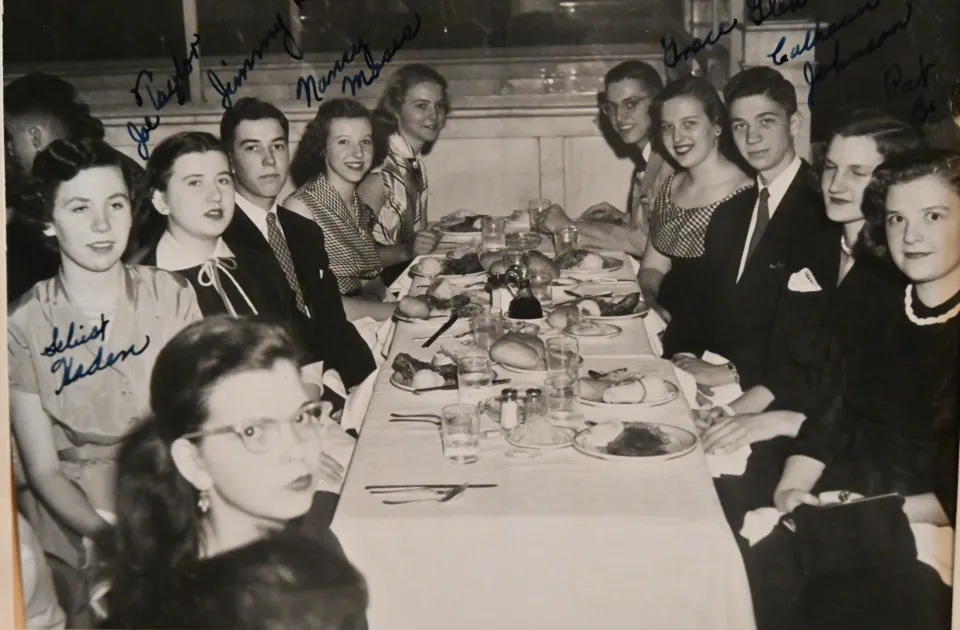
In my eighth-grade grammar school class, we were offered a trip to Washington to see our government up close. The cost would be $300 per student. On Saturdays, I made $3 from the grocery store, where I restocked shelves and swept floors. I earned another $5 in change on a busy Saturday carrying customers' purchases to their cars. So, I could afford the cost of my trip.
After getting all the details directly from the two accompanying teachers on the trip, my parents gave their approval. I paid $300 and signed up. What a fun adventure this turned out to be for five preteen boys and six girls going on a long trip without direct parental supervision. It might have been the first time any of us had been on a long trip without our parents.
Along the way, we laughed, read novels, told stories, sang songs, and dozed off when tired. I can't swear to it, but even a few delicious kisses—innocent, you understand—might have been exchanged when most were looking elsewhere.
We stopped and lingered at the US Naval Academy in Annapolis, Maryland. There we observed Midshipmen marching in groups of eight to twelve with the Academy's band playing with gusto the stirring martial music from the 1940s movie theme song, "Captain From Castile." Hearing that music, I was moved, hooked, blown away, and determined to go there. Of course, the event was well orchestrated to please, impress, and entertain the hundreds, even thousands, of civilians standing and wandering about.
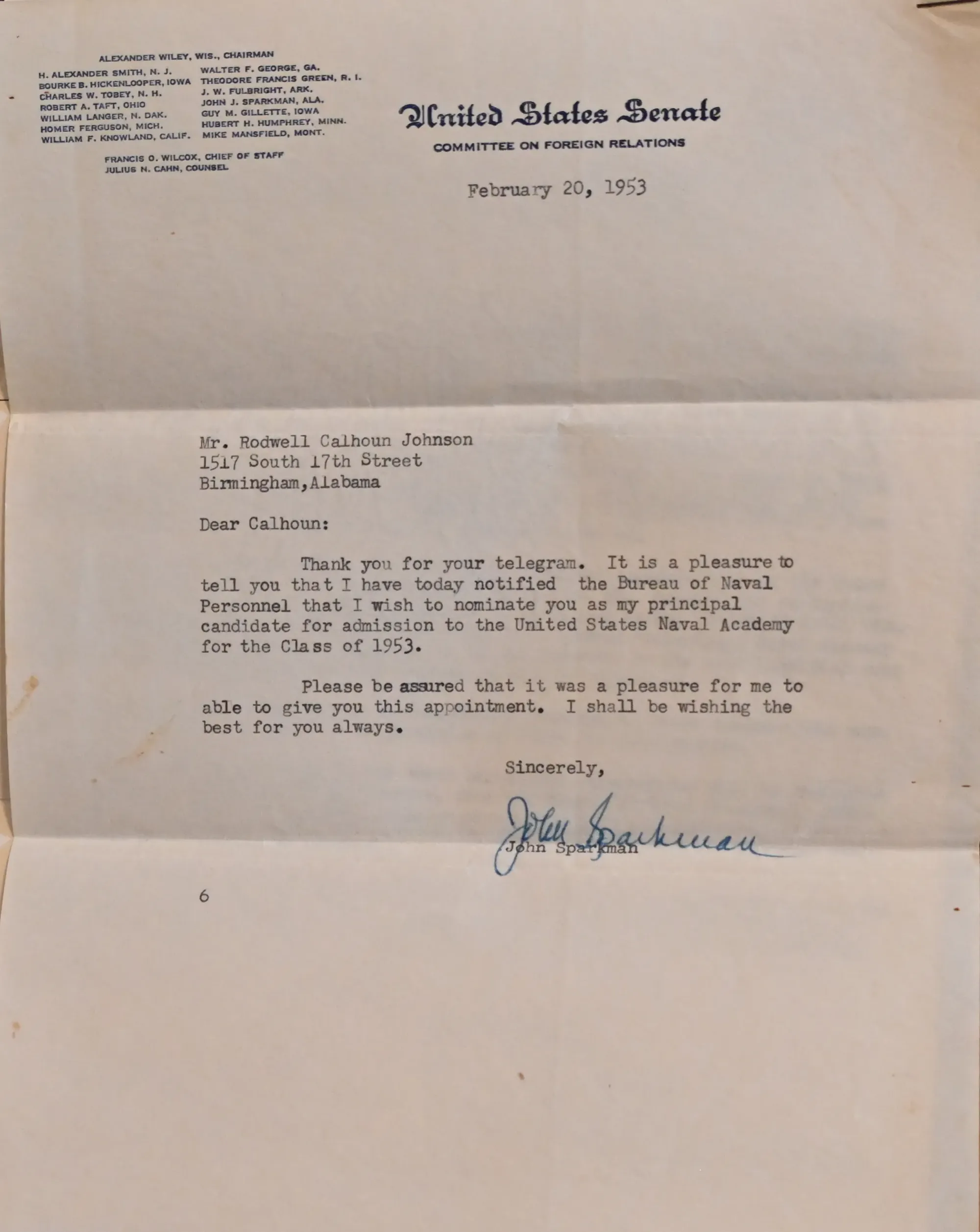
Returning home, I began my research. There were two ways: (1) Enlist in the Navy for four years and request a direct Presidential appointment. This seemed risky. If one failed to receive a presidential appointment, you were returned to finish out your four-year commitment in the fleet. Or (2) Appeal to your state's Congressional Senator. For me, that would be Senator John Sparkman of Alabama.
Telephoning Senator Sparkman's office, his aide told me that I needed letters of recommendation from at least three prominent local citizens in the community attesting to my good character. Then, I would have to take a written exam to rank me against other applicants. The Senator made only merit-based selections to the Military Academies.
He said, "Don't get discouraged. Submit your paperwork, get a complete physical and dental exam from NAS Memphis. We'll send the senator's test there. You can take it there. Remember, you may have a year, and sometimes it may take that to get your appointment to the class of 1957. It's too late to make the class of 1956. We will notify you when your appointment comes through." After much thought, I enrolled in the University of Alabama fall semester 1952.
I registered and signed up for 21 semester hours in their engineering prep program. It included Mechanical Drawing, Math, Physics, and Chemistry. My Alabama advisor commented that it was "too many hours." "You will burn out." She was right; I barely kept up. I had a miserable time studying, going to class, and watching and later hearing about my roommate being invited to weekly meet-and-greet tea dances—formal dances hosted by the sororities on campus. The payoff was that I did acquire more discipline and forbearance.
Those gifts served me well the next year, when I entered the US Naval Academy as a plebe at 19 (one year older) than many of my contemporaries. What I learned at Alabama academically and the maturity I gained in that extra year helped me for the next four years and well beyond.
As promised by Senator Sparkman's aide, his appointment of me to the USNA Class of 1957 came through in late May 1953. My reporting date was set for June 7th, 1953. I had been on pins and needles waiting for the news. There was rejoicing at home. Mother, Dad, my five-year-old sister Penny, and I drove away from Birmingham in Dad's 1953 Oldsmobile Eighty-Eight on June first. About 760 miles of two-way state roads later, we arrived. Mother worried all the way that we wouldn't make my reporting date.
About noon, first- and third-class midshipmen became our watcher-guides. They separated us from our families, telling them to say their goodbyes then or return by 4:00 PM for a final farewell. Dad looked uncomfortable and sad, my mother and little sister were crying, and I was in a long line waiting to get a buzz cut before being sworn into the Navy. We said our goodbyes, and the family departed for home.
Plebe summer began in earnest the next morning at 0500. It was known as hell week. It lasted three weeks. It was mostly run, jump, get-in-shape exercises and mild hazing. We'd endure grueling physical training, then, covered in sweat and grime, we were told to run to our rooms—shared with two other plebes—take a 2-minute Navy shower, dress, and report back in fifteen minutes for a full-dress inspection. As one could imagine, over a third didn't return on time. They would be given 15 to 20 demerits, to be worked off at the rate of 5 demerits per hour marching or during Saturday afternoon's free time. Those with no demerits could do what they wanted: write letters home, organize clothes, or spit-shine our two pairs of dress black shoes.
The hot and humid Maryland summer passed quickly. In September, all upperclassmen returned from shipboard cruises or visiting various Naval Air Stations on the east and west coasts. Then, we learned that fighters and bombers were the new tip of the Navy's spear, not the battleships' 21-inch cannons. They were slated for shore bombardment only.
Member discussion