Post-Repeal New England Travel Dispatch on Liquor Sales
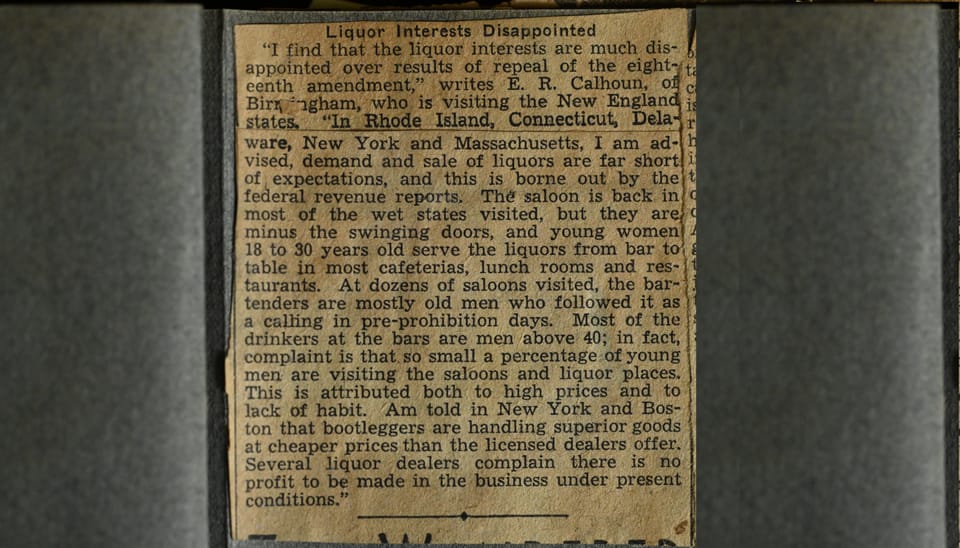
Text Transcription
Historical Analysis
This dispatch, written sometime in late summer of 1934, describes the United States in the awkward, experimental beginning of the post-Repeal era. When Utah ratified the Twenty-First Amendment in December 1933, bringing an end to the “noble experiment,” it did not create an open national market overnight. Instead, authority over alcohol was handed straight back to individual states, sparking intense debates across the nation over whether
liquor should be sold by private package stores, private taverns, or government
monopolies.
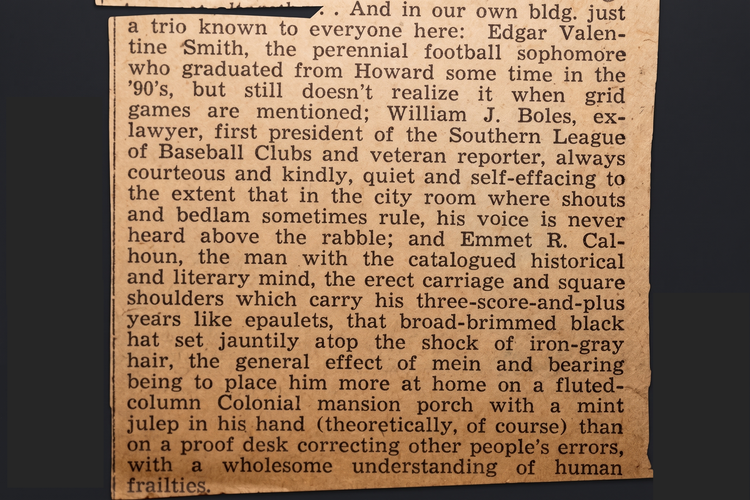
Emmet's travels through Massachusetts and New Hampshire took place right when the “control state” model was finding its footing. Drawing heavily on the 1933 Rockefeller Commission report (Toward Liquor Control), several northern states decided that eliminating private profit from the retail sale of hard liquor would prevent the return of the disreputable antebellum saloon. In New Hampshire, the state created a state liquor commission that owned and operated every package store, while Massachusetts implemented strict licensing and price controls.
For an Alabama editor, the contrast was profound. In 1934, Alabama was still officially bone-dry under state statute; the state would not hold its own referendum or create the Alabama Alcoholic Beverage Control (ABC) Board until 1937 under Governor Bibb Graves. Down in Jefferson and Pickens counties, thirsty citizens still relied on clandestine deliveries from moonshiners operating out of the Appalachian hollows or bootleggers hauling corn liquor across the state line. Emmet’s report back to The Birmingham News served as a quiet, reassuring editorial argument to his dry-leaning Alabama neighbors that state control could restore civic order without triggering moral collapse.
When Governor Bibb Graves pushed the Alabama Beverage Control Act across the desk in February of 1937, it officially brought an end to twenty-two long, bone-dry years of statewide prohibition. But folks hoping they could suddenly walk down to the corner tavern for an honest pour were sorely mistaken. What Alabamians actually got wasn’t freedom; it was a state-run liquor monopoly wrapped in a maze of local politics. First came the county votes, which sliced the state into an odd, patchwork quilt. The urban hubs—places like Mobile with its easy port access, or Birmingham’s iron mills—promptly voted themselves “wet.” But the rural hill-and-hollow country across central and north Alabama dug in its heels and stayed resolutely dry. The ink was barely dry on those election returns before folks in dry hollows started cranking up their pickup trucks, driving across county lines to buy legally, and hauling their haul right back home. It made overnight outlaws out of ordinary neighbors and kicked off a decades-long game of cat-and-mouse between local sheriffs, state ABC revenue men, and the moonshiners who were never going to pay taxes anyway.
Wherever the wet vote won, the state tightened its grip. Alabama set up its own official ABC package stores—plain, austere shops where distilled spirits were kept behind the counter and sold at prices set in Montgomery. No independent liquor stores, no sawdust-floor saloons. If you wanted to drink outside your own parlor, you were stuck finding a licensed dining room or a private club. Beer and wine got a little more breathing room through licensed private grocers, but every drop came with a hefty tax tag. And taxes, really, were the heart of the matter. Graves wasn’t running a moral crusade; Alabama was flat-broke from the Great Depression. The state desperately needed cash to keep country schoolhouses from locking their doors and to fund basic public welfare. Funneling every drop of legal whiskey through the state treasury worked like a charm—it quickly turned into one of Montgomery’s most dependable money spigots, pouring cash into schools, roads, and county coffers.
To make sure nobody cheated the register, the ABC built its own armed enforcement arm from scratch. For years after, state agents roamed the back roads, axing illicit copper stills, chasing down moonshine runners through pine thickets, and making sure nobody was cutting in on the state’s very tidy, very lucrative new business.
Member discussion