Alabama Sales Tax Debate & Reflections on Translating the Lord's Prayer
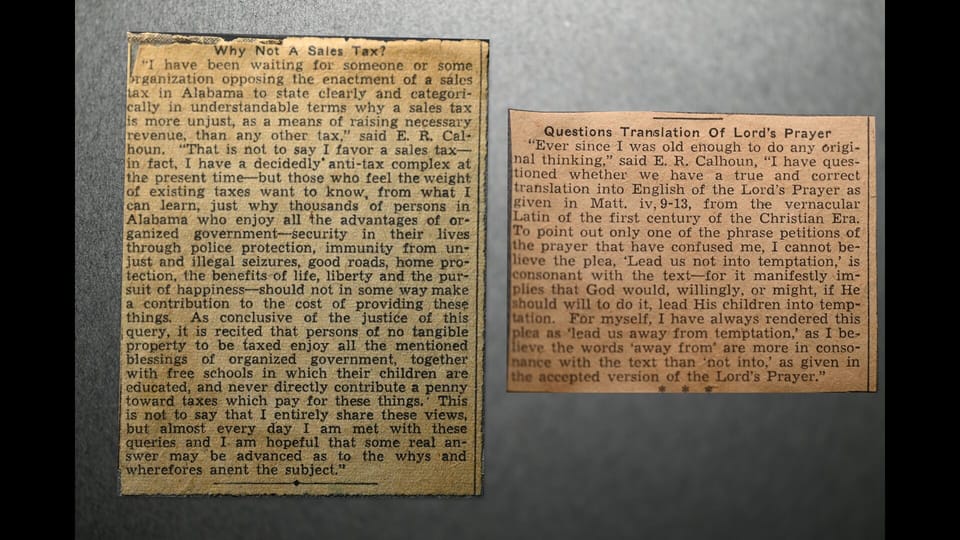
Left Column
Right Column
Historical Analysis
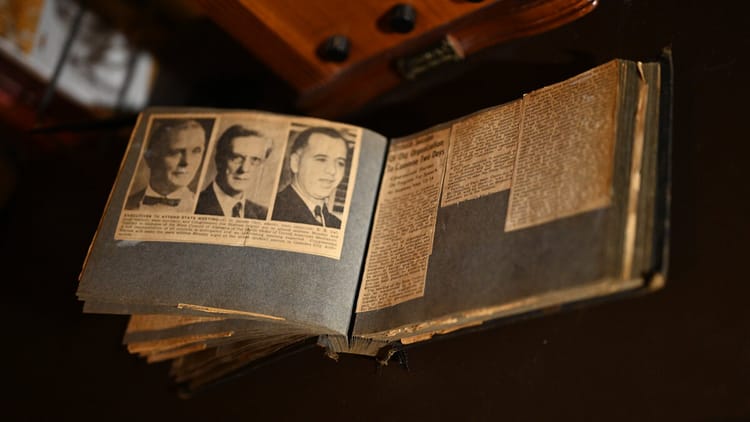
This thoughtful commentary was written during the winter of 1936–1937, when Governor Bibb Graves called the Alabama Legislature into a contentious special session to pass the state's first luxury and retail sales tax. The Great Depression had decimated county property tax receipts, leaving county school boards across Alabama unable to pay teachers or buy coal to heat rural classrooms. The proposal to levy a two percent gross receipts tax sparked intense resistance from Birmingham retail merchants and working families who viewed it as a regressive tax on daily survival.
By the time 1937 rolled around, Alabama’s public schools were running on fumes. The state had built its school funding on local property taxes, but as the Great Depression deepened, land values collapsed, tax delinquencies spiked, and local coffers dried up almost overnight. The results were devastating in the classrooms. In many rural counties, school terms shrank to just three or four months because the money simply ran out. Teachers were handed discounted paper scrip or went unpaid entirely, working on credit at the local general store while waiting on funds that never materialized. The legislature had passed an ambitious Minimum Program Act in 1935 to guarantee a uniform seven-month school year and baseline teacher salaries, but without a real stream of cash behind it, the promise was hollow.
That reality forced Governor Bibb Graves and the legislature to pass a two percent retail sales tax in February 1937. Lawmakers initially sold it to a reluctant public as the Luxury Tax Act, exempting basic groceries and farm staples to soften the blow. Small aluminum and brass mill tokens began rattling in people's pockets to cover the fractional pennies on five- and ten-cent purchases. Most importantly, the law didn't dump that new stream of cash into the general fund. Instead, the revenue was earmarked directly for the Special Education Trust Fund, dedicated strictly to the public schools.
As a rescue mission, the tax turned out to be an undeniable success. It brought an immediate, dependable influx of cash that exceeded initial forecasts. School boards were finally able to retire the IOUs, pay teachers in actual legal tender, and extend the school term to a reliable seven or eight months across the poorest hollows and farming communities. For the first time, state equalization dollars could bridge the glaring chasm between wealthier urban centers and destitute rural districts, literally keeping the classroom doors open and the lights burning.
That victory, however, came with lasting trade-offs. Relying on consumer spending to fund basic literacy placed a heavy, regressive tax burden on low-income sharecroppers and mill workers who spent every nickel they earned simply to survive. It also established the structural foundation of Alabama’s modern education finance system: shifting the tax load permanently away from property wealth and hitching classroom budgets to the unpredictable swings of the retail market, creating a boom-and-bust cycle that school administrators would grapple with for generations to come. In 1937, though, when the system sat on the brink of total collapse, the sales tax did precisely what it had to do.
Calhoun’s perspective stands out because he avoids partisan rhetoric, choosing instead to elevate the discussion through classical philology. Having studied Greek in his youth, Emmet examined the Lord’s Prayer in Matthew’s gospel, specifically the phrase ἡμῖν τὰ ὀφειλήματα ἡμῶν ὡς (opheilēmata for English transliteration), which explicitly denoted legal debts, financial mortgages, and commercial arrears rather than generic spiritual transgressions[1].
By linking biblical petitions to civic fiscal reality, I want to believe ER was offering a quiet, philosophical defense of maintaining public education. He recognized that while no citizen enjoys handing over hard-earned coins for zinc tax tokens at the dry-goods counter, an organized commonwealth cannot abandon its children or default on its civic duties without losing its moral compass.
Member discussion