A True Vindication of the South
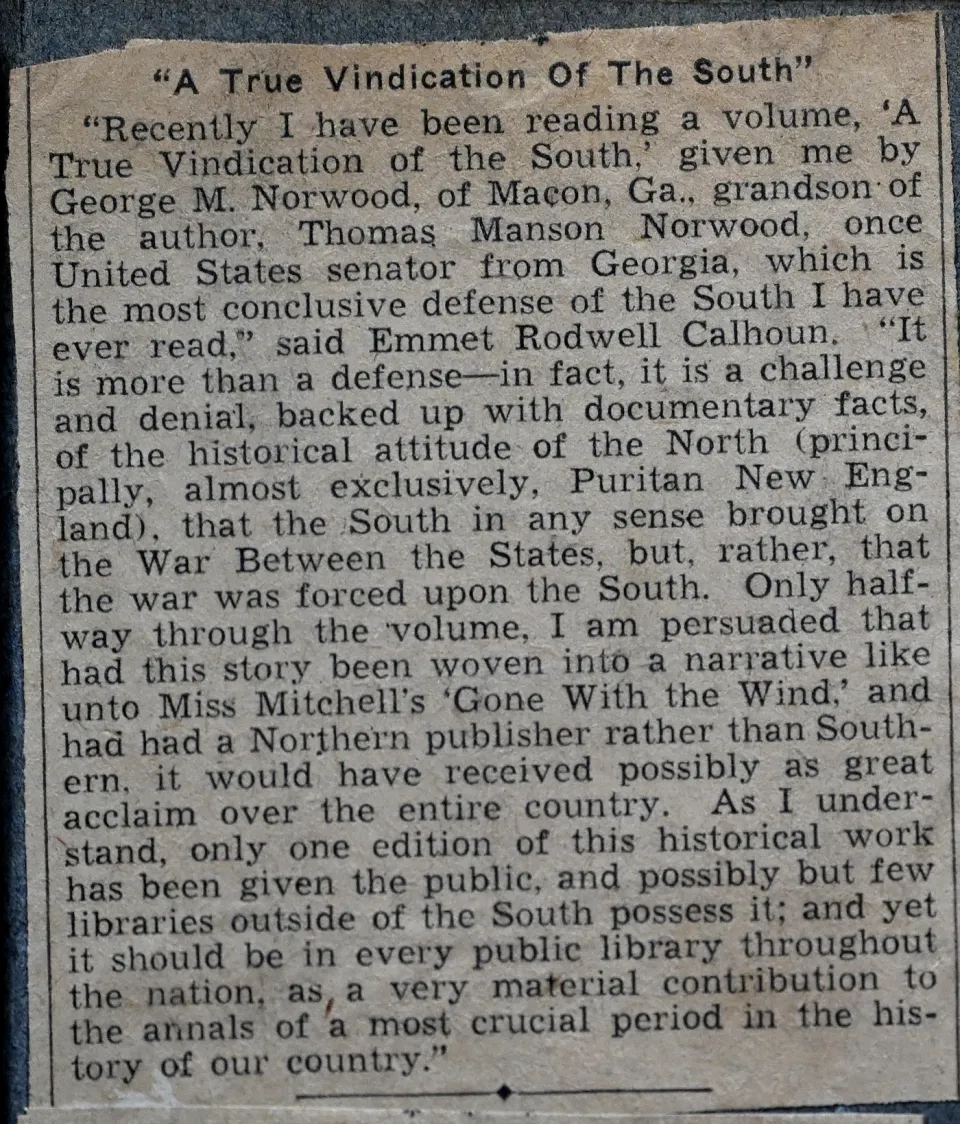
Clip Transcript
Historical Analysis
In the clip, E.R. is talking about a rare book he’d just been given called A True Vindication of the South, which was written way back in 1917 by a former Georgia senator named Thomas Manson Norwood. What makes this clipping so fascinating is how it connects a dry, forgotten history book to one of the biggest pop-culture explosions in American history: Gone With the Wind.
When you look at Norwood’s actual book, it’s basically a massive, 450-page legal argument. He doesn't look at the Civil War as a moral battle over slavery. Instead, he treats it like a broken contract. He argues that the United States was originally set up as a voluntary agreement between totally independent states. In Norwood's eyes, when the North started interfering with Southern laws, they broke that contract. So, when Calhoun reads this in 1938, he writes in the newspaper that the book proves the war was entirely forced upon the South. Norwood even points the finger at a specific villain, laying the blame almost exclusively on what he calls the "fanaticism" of Puritan New England, claiming they only turned against the slave trade after they stopped making money from it.
But the real magic of this clipping is how Calhoun connects this old political textbook to the book everyone was reading in 1938. Margaret Mitchell had published Gone With the Wind just two years earlier, and the whole country was losing its mind waiting for the movie version to come out. Calhoun writes that if Norwood’s historical facts had just been woven into a dramatic story like Miss Mitchell’s novel, it would have been a massive nationwide hit. He completely understood the difference between a boring history lesson and a great story. Norwood’s book was full of dense legal arguments published by a tiny local press in Savannah, so it ended up gathering dust in just a few Southern libraries. Mitchell, on the other hand, took those exact same romanticized ideas about the old South and turned them into a blockbuster romance that a major New York publisher sent across the globe.
This clipping shows how people in the late 1930s were using the massive hype around Gone With the Wind to try and bring older, forgotten Southern arguments back into the spotlight. For readers at the time, Hollywood and the local bookstore were providing the emotional drama, while old Senator Norwood was providing the "facts" they used to back it up.
Member discussion